A First Morning in an Unfamiliar Town by Bicycle
A first morning in an unfamiliar town by bicycle is easier to enjoy when you choose a modest area, use visible landmarks and leave room to turn.
The common mistake on a first morning in an unfamiliar town by bicycle is trying to see too much before breakfast has settled. A route that looks tidy on a screen can turn into repeated stops, awkward crossings and a ride spent negotiating instead of noticing. Choose a modest area, let visible landmarks do some of the orienting, and treat a change of direction as part of the plan.
Why does the first ride feel harder than it looked?
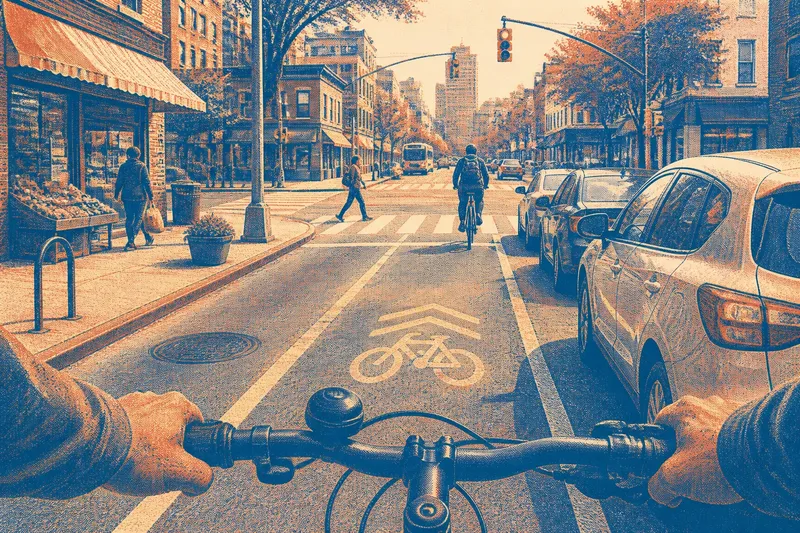
A town is not just a collection of streets. Its traffic habits, one-way rules, paving, hills and busy hours may be new to you, and a map will not convey all of that clearly. Even a short ride asks for more attention when every junction is unfamiliar.
That extra attention is the reason to keep the first outing modest. Pick a compact district near where you are staying, with a clear way back and a place to pause. The aim is not to cover the town; it is to learn how this particular place behaves from the saddle.
Before leaving, check the bicycle’s basic condition and make sure you can carry what you need without awkwardly shifting your balance. Ask your accommodation or a local bike shop about any local riding conventions or restrictions that matter on your intended streets. Rules and equipment requirements can vary by place, so follow local guidance and the bicycle maker’s instructions where they apply.
How should you choose a modest area?
Start with one destination that gives the ride a reason to exist: a market square, riverside path, neighborhood bakery or public garden. Then identify one nearby place that would still make a pleasant stopping point if the first destination feels crowded or difficult to reach. Keep both options within an area that looks manageable on the map, rather than linking every appealing pin into a grand circuit.
Look for boundaries that are easy to recognize. A river, railway, park edge or prominent avenue can help you understand where you are without constantly checking a screen. A modest area with clear edges is like using the frame of a door to keep a room in view: it gives your attention a useful limit.
Check the route between those boundaries for obvious complications. A bridge may be the only convenient crossing; a divided road may have few safe places to cross; a pedestrian street may not allow riding. If the map leaves an awkward gap, choose another route rather than assuming the missing detail will sort itself out.
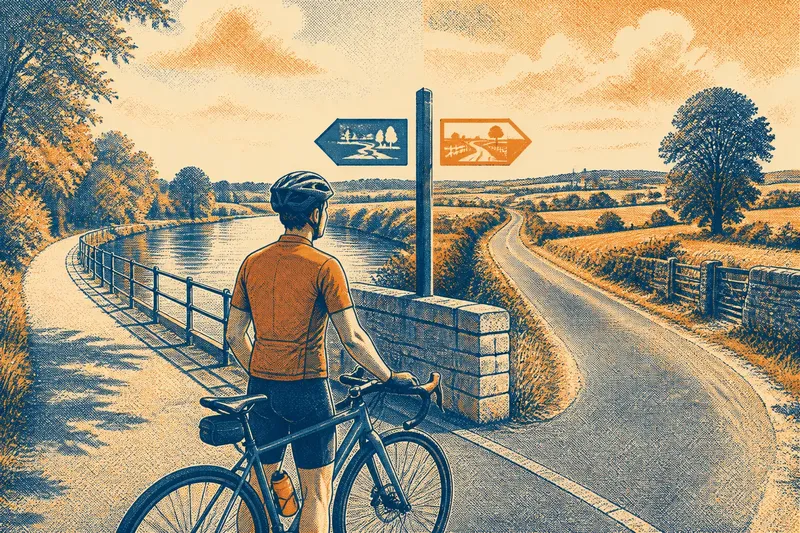
Say you are staying near a central station and want to visit a market square. You choose a riverside lane as the outward route and a broad avenue as a possible return, while marking a garden between them as a stopping point. If the lane is busy or confusing, you can pause at the garden and return by the avenue; the observable result is a smaller, calmer outing, not a scramble to complete an itinerary.
What goes wrong when you follow the map too literally?
Problem: the route looks direct but feels unpleasant. The map may favor a short connection that is noisy, crowded or difficult to cross. Try one parallel street, or dismount and walk a brief section where that is permitted and sensible. A small detour is often easier than repeatedly questioning a route that has already become uncomfortable.
Problem: a turn arrives before you can identify it. Street names may be unfamiliar, signs may sit at odd angles, and similar-looking blocks can blur together. Look for a larger landmark before the junction, such as a church tower, canal, public building or line of trees. Use the map to connect that landmark to your next turn, rather than staring down at the screen as the corner approaches.
Problem: the map suggests a crossing that is awkward on a bicycle. A road may be busy, a junction may channel traffic differently from what the map implies, or a route may end at stairs. Stop somewhere out of the flow and look for a more suitable crossing or a nearby route that avoids the obstacle. If the only option feels unsafe, turn back or walk the bicycle where appropriate.
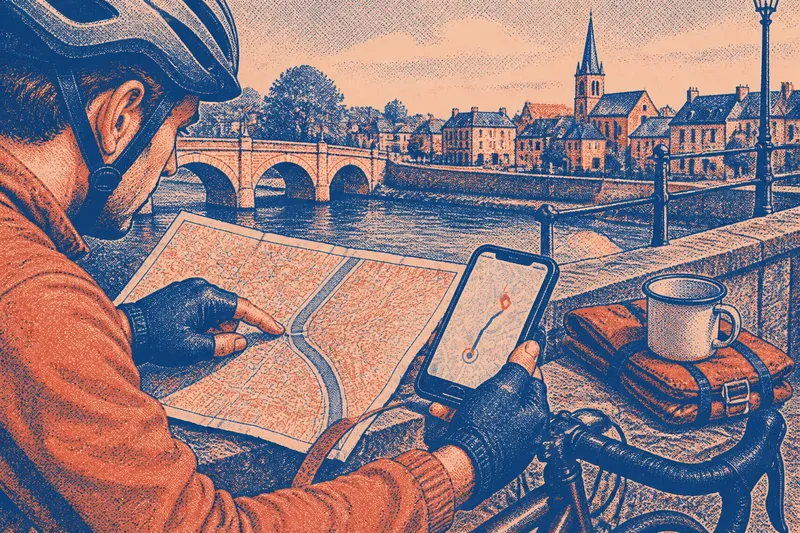
Problem: you keep checking the phone and lose the feel of the town. Frequent checks interrupt your attention and can make even a simple ride feel like an exam. Decide on the next recognizable landmark, then put the phone away until you reach it. If you need to check, stop in a place that does not block others.
Which landmarks are worth noticing?
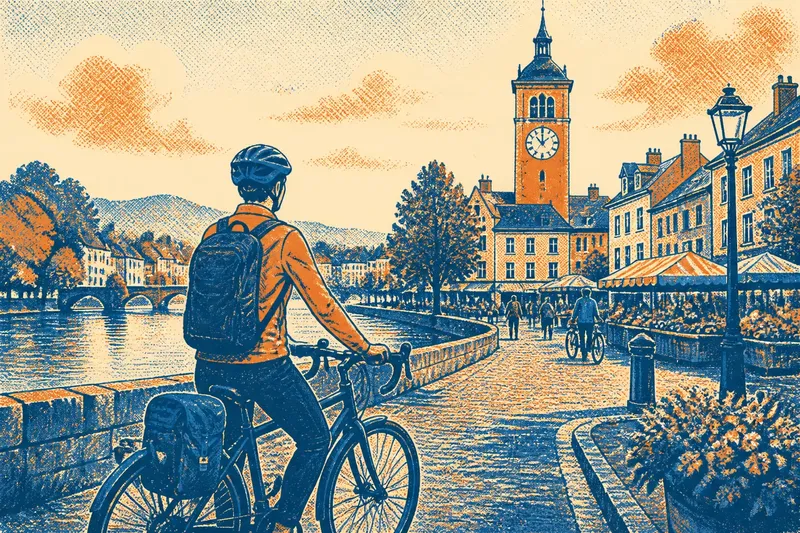
Useful landmarks are distinctive, visible from more than one angle and likely to remain in place. A clock tower, a river bend, a public square or a line of old trees can serve better than a small shop sign that may be hard to spot while moving. Notice what lies between landmarks, too: a change in paving, a hill, a row of cafés or a bridge can help you recognize the same street on the return.
Do not treat every landmark as a command to turn. Some are simply reference points: “the river is to my left” or “the square is behind the library.” This kind of observation lets you understand the area without converting the ride into a chain of directions.
Local routines can also provide clues, though they are not substitutes for road signs or your own judgment. A street that fills with delivery carts, school traffic or café tables may be more pleasant at another time. If the scene looks different from what you expected, adjust the route rather than assuming you have made a navigational mistake.
What should you do when the town surprises you?
A first ride rarely follows its plan exactly. A street may be closed, the market may occupy the square, or a route may become busy just as you arrive. These are reasons to revise the outing, not reasons to force it back onto its original line.
Use a simple order when something changes:
- Stop safely. Move out of traffic and foot traffic before checking the map or deciding what to do.
- Identify the problem. Work out whether it is a blocked street, a difficult crossing, a crowded destination or uncertainty about your location.
- Choose the smallest useful change. Try a nearby parallel street, a different landmark or a shorter return, rather than rebuilding the whole ride.
- Keep a clear way back. If the new route adds confusion, return along a familiar section or use a well-marked main street.
Changing direction can be the most informative part of the morning. A quiet lane may lead somewhere more interesting than the planned destination, while a busy square may be better viewed from the next street. Leave enough time to stop without turning every pause into a decision about whether you are behind schedule.
How do you leave room to change direction?
Plan a destination and a return option, not a sequence of obligations. Keep one uncommitted stretch of time in the morning for a café stop, a short walk or a turn toward something that catches your eye. This does not require elaborate preparation; it simply means resisting the urge to fill every gap on the map.
Use a few practical checks before setting out:
- Area: Can you describe the part of town you plan to explore without listing a dozen stops?
- Boundaries: Are there visible features that help you recognize when you have reached the edge of that area?
- Crossings: Have you noticed bridges, divided roads or other places where the route could become awkward?
- Landmarks: Do you have at least one large, easy-to-recognize reference point on the way out?
- Return: Is there a simple alternative if your planned street or destination is unpleasant?
- Pause: Is there a sensible place to stop without blocking a sidewalk or entrance?
If one answer is unclear, simplify the outing before leaving. A nearby destination and an obvious way back are enough for a useful first look; the town will still be there after lunch.
What do riders ask before a first town ride?
How long should a first ride in an unfamiliar town be?
Choose an outing that leaves time for pauses and a straightforward return, rather than aiming for a distance target. The right length depends on the terrain, traffic, your energy and how much attention the streets require.
Should you use a phone map while riding?
Use it for orientation, but check it while stopped rather than trying to read it in motion. A short note with the next landmark or turning street can reduce the need to consult the screen at every block.
What if you get lost in the town center?
Stop somewhere safe, identify a major landmark and use that to regain a sense of direction. If the streets remain confusing, return by a familiar route or ask a local for a clear, nearby reference point.
Is it better to explore alone or with someone local?
A local companion can explain street habits and point out useful connections, while a solo ride may make it easier to stop or change direction at your own pace. Either way, agree on a simple meeting point or return plan if the group separates.
A first morning in an unfamiliar town by bicycle works best when the route is small enough to change without fuss. Keep one landmark in sight, notice the street between it and your next turn, and let an inconvenient corner count as useful information. You will leave with more than a list of places: you will have a clearer sense of how the town fits together, which is a good reason to ride there again.