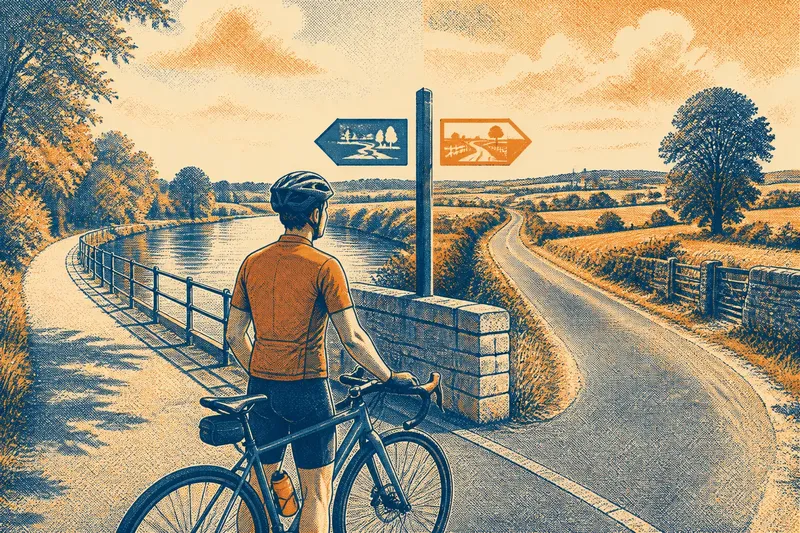
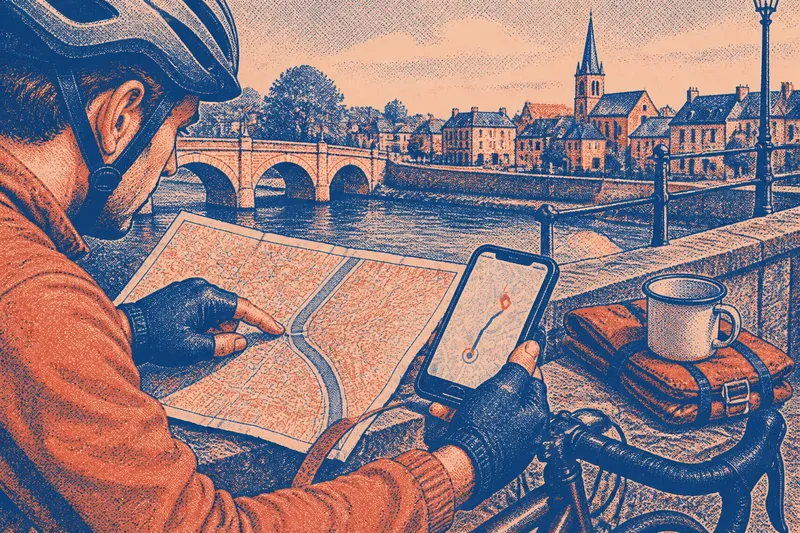
Why a Familiar Street Feels Different from a Bicycle
Why a familiar street feels different from a bicycle: a simple week of attentive rides can reveal overlooked crossings, rhythms, and street details.
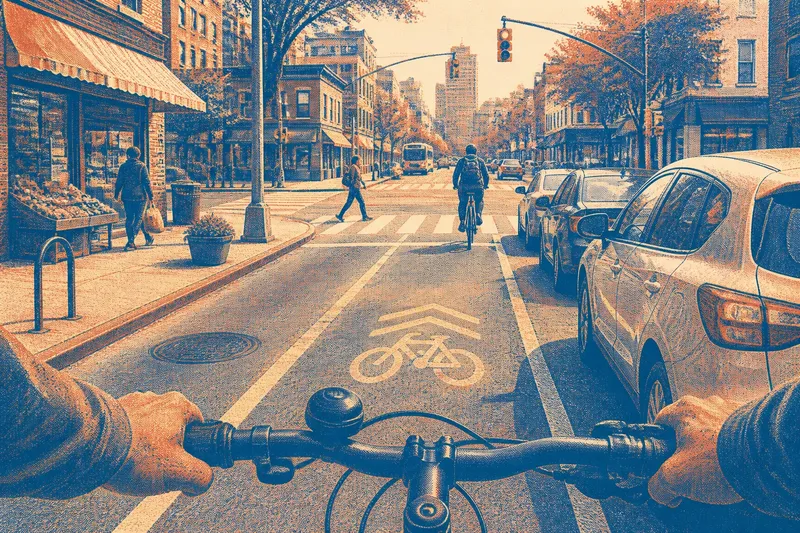
The usual mistake is to ride a familiar street on autopilot, looking only as far ahead as the next turn. From a bicycle, that habit can cost you the small details that make the street legible: a crosswalk hidden by parked cars, a shop entrance where people step out, or a surface change that shifts the ride. The street has not changed. Your speed, viewpoint, and attention have.
Why a familiar street feels different from a bicycle is not a mystery of scenery. A bicycle keeps you close enough to notice texture and sound, while moving quickly enough to make each glance selective. A short week of deliberate rides can reveal how that balance works without turning an ordinary trip into a field study.
What changes when you leave the sidewalk or car?
On foot, a block may feel like a sequence of doors and crossings. From a car, it may register as a stretch to pass through. On a bicycle, the street arrives in layers: the lane surface beneath the tires, movement at the curb, the position of traffic, then the next opening in the route. Your eyes move between near and far because both matter to the ride.
That shift changes scale. A shallow dip in asphalt can become noticeable; a broad avenue can feel less like a line on a map and more like a series of decisions. The rhythm of a signal, the sound of a delivery truck braking, or a patch of shade can help divide a familiar block into distinct parts. These are not necessarily new features. They are features that the bicycle makes harder to ignore.
Speed matters, but not as a simple contest between slow and fast. At a walking pace, you can linger over a storefront. At riding pace, details pass sooner, so attention tends to favor movement and openings. A familiar street can therefore feel both more immediate and less complete: you notice certain things intensely and miss others entirely.
How can one week change what you notice?
Use a normal route you already know, such as the ride to a grocery store, a transit stop, or a nearby park. Keep the route and destination ordinary. The point is not to collect a complete inventory of the neighborhood; it is to notice how a different question changes what reaches your attention.
- First ride: notice the surface. Pay attention to pavement seams, drain covers, painted markings, and the point where one surface gives way to another. Keep your gaze forward and observe only what is clear from your path.
- Second ride: notice the edges. Look for parked vehicles, open doors, loading areas, bus stops, and places where people may enter the street. Consider how these features change the usable space beside you.
- Third ride: notice the crossings. Observe where pedestrians cross, where sightlines narrow, and how the signal sequence shapes movement. Do not treat a familiar signal as permission to stop paying attention.
- Fourth ride: notice sound. Listen for approaching vehicles, braking, bells, voices, and changes in surface noise. Sound can suggest movement outside your direct view, but it should not replace looking.
- Fifth ride: notice the street’s rhythm. Attend to repeated interruptions and pauses: a row of driveways, a busy corner, a quiet stretch, or a cluster of entrances. See how those patterns affect the pace of your ride.
- Sixth ride: notice what changes with the hour. Compare the route during a different part of the day if that fits your routine. Light, deliveries, traffic, and people waiting at the curb can alter the feel of the same block.
- Seventh ride: choose one observation to keep. Decide what you now want to remember on future trips, such as a narrow pinch point or a crossing that deserves a more deliberate approach. Leave the rest as passing detail.
There is no need to take notes while riding. If you want a record, make a brief note after stopping somewhere safe. A few words such as “busy curb by bakery” are more useful than trying to remember a full moving picture of the street.
What does attention look like while riding?
Attentive riding is not staring at every interesting object. It means choosing a useful focus without surrendering awareness of the rest of the road. A bicycle handles best when the rider can see ahead, notice movement at the sides, and make small adjustments before a detail becomes an urgent problem.
Think of attention like a desk lamp, not a floodlight. It can illuminate one area clearly, but it does not light the entire room. You might focus on the line of parked cars while still checking the path ahead and listening for traffic. If a pothole, pedestrian, or vehicle demands attention, the planned observation can wait.
Do not look down for long to inspect pavement or markings. Notice surface features from a forward-facing position, and avoid weaving around minor irregularities without checking the space beside you. When the street is crowded or conditions feel uncertain, ordinary safe riding takes priority over observation.
Why does the same block feel different at another time?
A street is not a fixed picture. Its edges fill and empty. A curb used for parking in the morning may become a loading space later; a quiet crossing can gather people near school or transit hours. Sun glare, rain-dark pavement, and shadow can change what is easy to see. Even a short wait at a signal can make you notice a storefront or a side street that usually slips past.
These changes can make a routine route feel less predictable, but they can also make its patterns easier to understand. If you ride at different times, compare the demands rather than deciding that one version is the street’s “real” character. The useful question is what conditions have changed and what that asks of your attention today.
What questions do riders ask about familiar streets?
Why does a familiar route seem longer by bicycle?
A bicycle exposes the sequence of crossings, pauses, and surface changes that a car can smooth into one continuous trip. The route may not be longer; its smaller events are simply more present.
Is it useful to ride the same street in both directions?
Yes, if the route and conditions suit you. The opposite direction changes your sightlines, approach to crossings, and view of entrances, so details hidden on one pass may become obvious on the other.
Should I stop to look at something I notice?
Stop only where it is safe and does not block other road users. If there is no suitable place, let the detail go; a street observation is not worth creating a hazard.
Can a familiar street still surprise an experienced rider?
Yes. Familiarity helps you anticipate the usual pattern, but it can also make you assume that pattern is unchanged. A delivery, a new obstruction, or a different flow of people can make a known block demand fresh attention.
What can you carry into the next ride?
After the week, keep one practical observation rather than trying to preserve every impression. Perhaps a row of parked cars makes a crossing hard to see, or a rough patch lies near an entrance where people often turn. That detail can help you approach the street with a more deliberate gaze without requiring a new route or a complicated plan.
Why a familiar street feels different from a bicycle becomes clearer when you treat each ride as the same place seen under slightly different conditions. The street offers more than one view, but attention is limited. Choose what matters for the ride in front of you, leave room for what may change, and let the remaining details pass without complaint.