The Matching Kit Myth: Why a Ride Need Not Look Uniform
Matching cycling kit can look tidy, but a useful outfit starts with comfort, weather and pockets. Choose pieces that work together without matching.
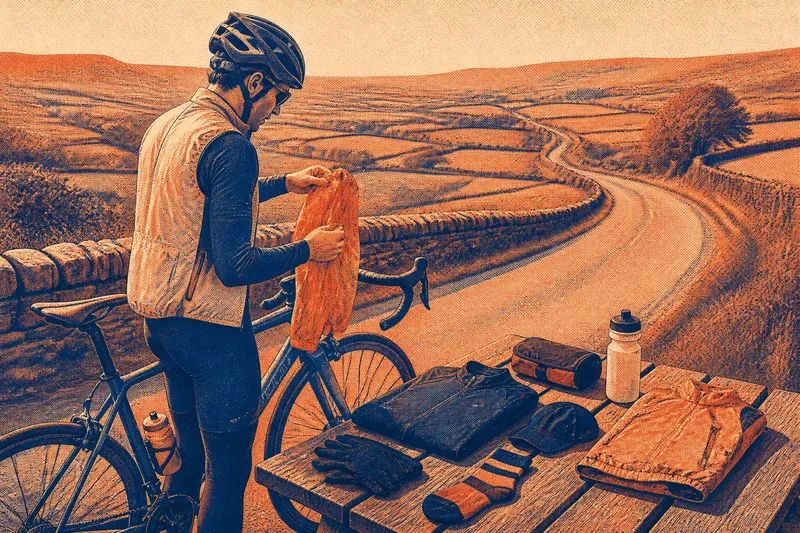
The common mistake with matching cycling kit is buying a coordinated outfit before asking what the ride requires. The cost is practical: a handsome jersey may have the wrong pockets, or a neat set may leave you cold when the route climbs into shade. Cycling clothes do not need to look uniform; they need to make sense together on the ride you are taking.
That distinction matters on mixed journeys, where a familiar jersey, a borrowed rain shell and a bright pair of socks may all earn their place. Treat the outfit less like a uniform and more like a tool roll: each piece has a job, and no one checks whether the tools are the same color.
What will the ride ask of your clothes?
Start with the conditions you expect to meet, not the photograph you might take at the café. Consider the route’s exposure, likely weather, pace, stops and how long you will be away from somewhere warm or dry. A sheltered urban spin and a breezy ride across open farmland can call for different layers even if they cover similar ground.
Write down the demands that affect comfort and usefulness:
- Will you ride mostly in sun, shade, wind or a mix?
- Are rain or spray plausible, and do you need a shell you can stow?
- Will the pace be steady, sociable or likely to include hard efforts?
- Do you need pockets for a phone, food, keys or a transit card?
- Will you spend time off the bike, where cycling-specific clothes may feel awkward?
Keep the list focused. It is not a wish list for every possible condition. It is a way to identify what the clothes must do so that color and coordination can remain preferences rather than requirements.
Which piece should you choose first?
Choose the item closest to your body first, usually a jersey or base layer, based on comfort and the expected temperature. Check the fabric against the ride: a light, breathable top may suit a warm, active outing, while a long-sleeved layer can be more comfortable in cool air. Fit matters more than whether it belongs to a matching collection. A hem that rides up or a collar that rubs will not become charming after several miles.
Next, choose the shorts or tights you already know you can tolerate for the expected duration. The chamois, seams and waistband are personal points of contact, not decorative details. If you are choosing unfamiliar items, avoid making the first outing an ambitious one. Give yourself room to notice how the garment feels while seated, standing and walking.
Then add layers for the conditions. A wind vest can sit over a jersey without matching it; a rain shell can be chosen for weather protection and packability rather than its relationship to your socks. Put removable layers where you can reach them. A bright shell may be useful in low light, while a muted jersey may be the one you already trust. Both can belong in the same outfit.
How do color and visibility fit in?
Color is a preference, but visibility is a practical consideration. Bright colors can make a rider easier to distinguish in some settings, while reflective details can help in dim conditions when they are illuminated. Neither replaces lights or careful riding. Think about the surroundings and the times you expect to be on the road, rather than assuming a coordinated set is automatically conspicuous.
Accessories can be chosen independently. A helmet, gloves, overshoes, socks and bag need not share a palette. Give each item a reason to be there: gloves for grip and comfort, a cap for sun or sweat, a bag for carrying what you need. If a color combination pleases you, keep it. If it does not, the road will not issue a citation.
Say you are planning a cool morning ride that may warm up by midday. You have a comfortable dark jersey, a light-colored wind vest and an older pair of gloves that fit well. You could wear them together, tuck the vest away when the air warms, and keep the gloves because they suit the ride. The expected result is an outfit that adapts without requiring a new matching set.
What should you check before setting out?
Once the main pieces are chosen, check their practical fit as a group. Put them on and take the position you will use on the bicycle. Reach for the bars, turn your head, and check that sleeves, cuffs and hems stay comfortable. Confirm that pockets remain accessible and that the items you plan to carry fit without pulling the jersey out of place.
Use this short check before leaving:
- Temperature: Is the first layer comfortable for the start, and can you remove or add a layer if conditions change?
- Movement: Can you reach the bars and turn your head without fabric tugging or bunching?
- Contact points: Do the shorts, gloves and footwear feel comfortable in the riding position?
- Storage: Are food, keys and phone secure and reachable where you want them?
- Weather: Is the shell suitable for the conditions you expect, and can you carry it if you take it off?
- Visibility: Do your lights and visible details suit the likely light and traffic conditions?
Follow garment labels and manufacturer instructions for care and use, especially where materials or protective features are involved. For the outfit itself, the useful decision is plain: keep a piece if it earns its place, not because it completes a set.
Can cycling clothes work off the bike?
That depends on the day. A café stop or a short walk may call for a layer that looks ordinary enough to wear indoors, while a long ride may make cycling-specific padding the sensible choice. If you expect to visit shops or take public transport, consider how easily the outer layers come off and whether you want a small change of clothes. These are comfort choices, not tests of whether you count as a “proper” cyclist.
There is also no need to disguise every sign of riding. A helmet hairline, dusty shoes or a bright jersey can simply mark the fact that you arrived by bicycle. If your plans include a place with a dress code or a local custom you want to respect, choose a cover layer or change of top. Keep the decision tied to the place and occasion rather than to a rule that every rider must look alike.
Does matching cycling kit matter for a ride?
Do cycling clothes need to match?
No. Choose pieces for fit, comfort, weather and storage; matching colors are an optional preference. A coordinated outfit is useful only if its individual pieces also work for the ride.
Should a cycling outfit be bright?
Bright colors can help a rider stand out, but visibility also depends on light, surroundings and other road users’ attention. Use suitable lights when needed and do not rely on clothing color alone.
Can you mix cycling brands or old and new clothes?
Yes, provided the pieces fit comfortably and serve their purpose together. An older glove that fits well can sit alongside a newer shell without creating a problem of style or function.
What matters more than a matching jersey and shorts?
Comfort at contact points, suitable layers, usable pockets and weather protection matter more during a ride. Check the garment’s fit and care guidance before relying on a feature such as water resistance.
When is a coordinated set worth choosing?
Matching cycling kit can be a reasonable choice if you enjoy the look, need several pieces at once or want a simple way to assemble an outfit. Buying a set is not the mistake; treating its coordination as evidence that it suits every ride is. Consider each item separately and keep only what fits the conditions you ride in.
When choosing matching cycling kit, let comfort and purpose make the first decisions, then use color to express your taste. If the clothes work, they belong together, whether their labels agree or not. A ride is not a parade, though a little style does no harm.